Description
The Indian Ringneck Parakeet (Psittacula krameri) is a sleek, medium-sized parrot that has been prized for centuries for its beauty and exceptional talking ability. While they are members of the parakeet family, they are considered "true parrots" due to their high intelligence and long lifespan.
Physical Characteristics
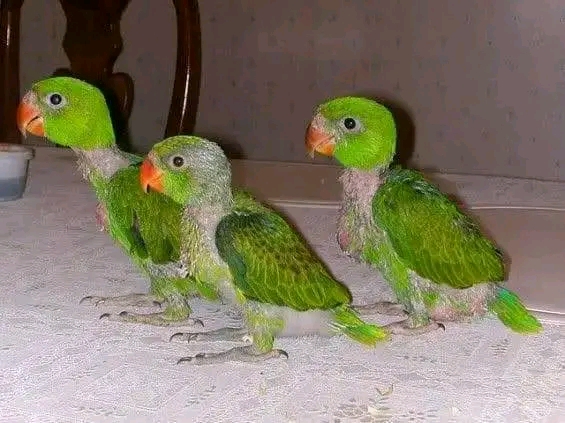
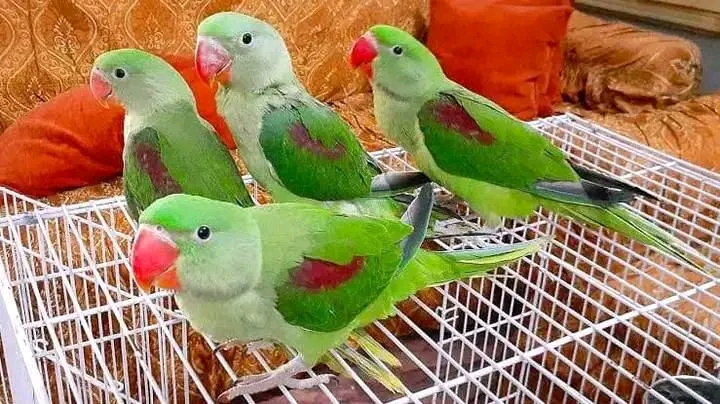
The "Ring": Their name comes from the distinct black and rose-colored collar that develops around the necks of adult males. Females and juveniles usually have no ring or a very faint, shadow-like band.
Dimensions: They are approximately 14 to 17 inches (40 cm) long, though their elegant, tapering tail feathers make up a large portion of that length.
Weight: These birds are aerodynamic and light, typically weighing between 110 and 140 grams.
Coloration: While their "wild-type" color is a vivid lime green with a bright red beak and blue tail feathers, captive breeding has produced dozens of stunning mutations, including blue, violet, lutino (yellow), albino (white), and grey.
Behavior & Personality
Independent Spirit: Unlike "cuddly" parrots (like Macaws), Ringnecks are known for being more independent. They enjoy being part of the family "flock" and participating in activities, but many prefer not to be petted or handled excessively.
World-Class Mimics: They are among the best talking parrots. They are famous for their remarkably clear, high-pitched voices and can learn hundreds of words, phrases, and household sounds.
The "Bluffing" Phase: Adolescents (around 6 months to 1 year) often go through a temporary "bluffing" stage characterized by increased nippiness and territorial behavior. With patient, consistent training, they typically outgrow this phase.
Intelligence: They are highly inquisitive problem-solvers. If they aren't provided with enough mental stimulation, they can become bored, loud, or destructive.
Habitat & Origin
Native Range: They have a massive natural distribution across central Africa and the Indian subcontinent.
Adaptability: They are incredibly hardy birds that thrive in diverse environments, from semi-desert savannas to urban city parks. This adaptability has allowed feral colonies to establish themselves in places like London, California, and Florida.
Lifespan
Longevity: A well-cared-for Indian Ringneck is a long-term companion, typically living 20 to 30 years, with some reaching 35+ years in captivity.
Highlights
- Vet checked
- Hand-tamed
Care notes
The Indian Ringneck Parakeet (Psittacula krameri) is an elegant, intelligent, and vocal species that is as famous for its striking appearance as it is for its independent personality.
Physical Description
The Signature Ring: Adult males develop a distinct black and rose-colored collar around their necks by age three. Females and juveniles typically have a subtle, pale shadow of a ring or none at all.
Sleek Build: They are medium-sized birds, reaching 14 to 17 inches in length, though their long, tapering tail feathers account for more than half of that size.
Vibrant Mutations: While their natural "wild" color is a bright lime green with a red beak, captive breeding has introduced a rainbow of colors, including blue, violet, yellow (Lutino), white (Albino), and grey.
Lifespan: These birds are a long-term commitment, often living 25 to 30 years, with some reaching over 40 years under optimal care.
Care Requirements
To thrive, Indian Ringnecks require a balance of specialized nutrition and significant mental stimulation.
1. Nutrition & Diet
Base Diet: High-quality pellets should make up 60–80% of their daily intake.
Fresh Foods: Supplement daily with a "chop" of dark leafy greens, carrots, broccoli, and peppers. Fruits like apples and berries should be offered in moderation as treats.
Foraging: They are natural foragers; hiding treats in puzzle toys helps mimic their wild behavior and prevents boredom.
Toxic Foods: Never feed them avocado, chocolate, caffeine, or salty snacks.
2. Housing & Environment
Cage Size: Because of their long tails, they need a cage with significant height and width—at least 24" x 24" x 36" is the bare minimum, though a larger flight cage is strongly recommended.
Out-of-Cage Time: They are high-energy birds and need 2 to 4 hours of supervised exercise daily to fly and explore.
Safety: Avoid placing the cage in drafty areas or direct, intense sunlight. Never use Teflon or non-stick cookware near them, as the fumes are fatal.
3. Social & Mental Health
Independent Nature: Unlike the "velcro" personality of a Macaw, Ringnecks are often "look but don't touch" birds. They enjoy being part of the family but may not always want to be petted.
"Bluffing" Stage: Adolescents may go through a "nippy" phase where they test boundaries. Consistent, gentle training is essential during this period.
Destruction: They have a natural urge to chew. Provide a constant rotation of bird-safe wood, leather, and shreddable toys to prevent them from chewing on furniture.