Description
The Umbrella Cockatoo: Nature’s Living Snowstorm
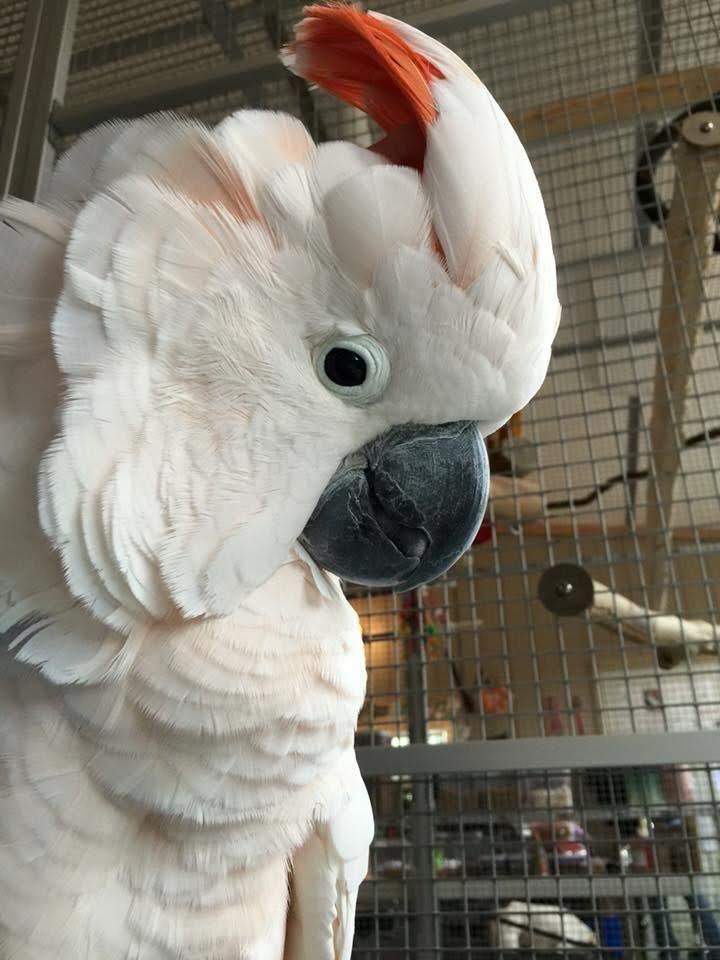
The Umbrella Cockatoo (Cacatua alba), also known as the White Cockatoo, is one of the most recognizable and emotionally complex parrots in the world. Native to the tropical rainforests of Indonesia, these birds are famous for their dramatic white crests that fan out like an umbrella when they are excited, curious, or feeling territorial.
Physical Appearance
The Umbrella Cockatoo is a study in white, but a closer look reveals a sophisticated palette:
• Plumage: Predominantly snow-white feathers.
• Hidden Colors: A soft, lemon-yellow glow is tucked under the wings and tail, visible only during flight or a big stretch.
• Accents: They feature a powerful blackish-grey beak, grey feet, and a distinct ring of pale blue skin surrounding the eyes.
• The Crest: Unlike the narrow crests of other cockatoos, the Umbrella's crest is broad and rounded, creating a majestic "halo" when fully raised.
Personality and Behavior
Often called "Velcro birds," Umbrellas are legendary for their extreme affection. They don't just want to be near you; they want to be on you.
• Emotional Intelligence: They are roughly as emotionally demanding as a human toddler. They thrive on physical touch, cuddles, and constant social interaction.
• The Noise Factor: They are exceptionally loud. In the wild, their screams carry for miles to keep the flock together. In a home, they use that same voice to demand attention.
• Intelligence: These birds are master problem-solvers. They can learn complex tricks, mimic sounds, and even use "tools" (like twigs) to scratch themselves or forage.
Important Considerations for Owners
Owning an Umbrella Cockatoo is a lifelong commitment. Because they are so social, they are prone to "boredom behaviors" like feather plucking or destructive chewing if left alone for more than a few hours.
Highlights
- Hand fed available
- Tamed####
- DNA####
Care notes
Caring for a moluccan Cockatoo is a massive commitment that requires balancing their physical health with their intense emotional needs. Below is a comprehensive care guide broken down into the "instances" of care they require to thrive.
The Care Guide: 5 Pillars of Success
1. Nutritional Care (The Fuel)
A seed-only diet is a "death sentence" for these birds as it leads to fatty liver disease.
• Formulated Pellets (60-70%): High-quality, bird-specific pellets should be the base.
• Fresh Produce: Daily servings of dark leafy greens (kale, spinach), orange veggies (sweet potatoes, carrots), and limited fruits (apples, berries).
• Healthy Proteins: Occasional cooked eggs or beans provide essential amino acids.
• Toxins to Avoid: Never feed them avocado, chocolate, caffeine, onions, or fruit pits/seeds.
2. Environmental Care (The Home)
Because they are destructive and active, their "house" needs to be a fortress.
• The Cage: Minimum size should be 36"W x 24"D x 48"H, made of heavy-duty stainless steel.
• Perch Variety: Use natural wood perches of varying diameters to prevent "Bumblefoot" (foot sores).
• Sleep: They require 10–12 hours of dark, quiet sleep every night to prevent hormonal aggression.
3. Emotional & Social Care (The "Velcro" Factor)
Umbrellas are "social sponges"—they absorb your energy and demand your time.
• Out-of-Cage Time: They need at least 3–4 hours of supervised interaction daily.
• The Attention Trap: While they love cuddles, you must teach them to play independently. Over-cuddling can lead to "extreme jealousy" and screaming when you leave the room.
• Destruction as Play: They must chew. Provide a constant supply of bird-safe wood, cardboard, and "shredder" toys to save your furniture.
4. Hygiene & Grooming (The "Dust" Control)
Umbrellas produce a white "powder down" that can coat your house and irritate human lungs.
• Bathing: They should be misted with water or taken into a lukewarm shower 3–5 times a week to manage dust and keep feathers healthy.
• Air Filtration: Using a HEPA air purifier in their room is highly recommended for both the bird's and your respiratory health.
• Pedicures: Nails usually need a professional trim every 3–6 months to keep them from becoming needle-sharp.
5. Medical Care (The Safety Net)
• Avian Vet: They require a specialized avian veterinarian (standard dog/cat vets often aren't equipped for parrots).
• Annual Exams: Blood work and fecal tests are vital because birds are "masters of disguise"—they won't show they are sick until it is an emergency.