Description
The Sun Conure (Aratinga solstitialis), also known as the Sun Parakeet, is one of the most vibrant and sought-after medium-sized parrots in the world. While common in homes, they are surprisingly rare and considered endangered in the wild.
Physical Appearance
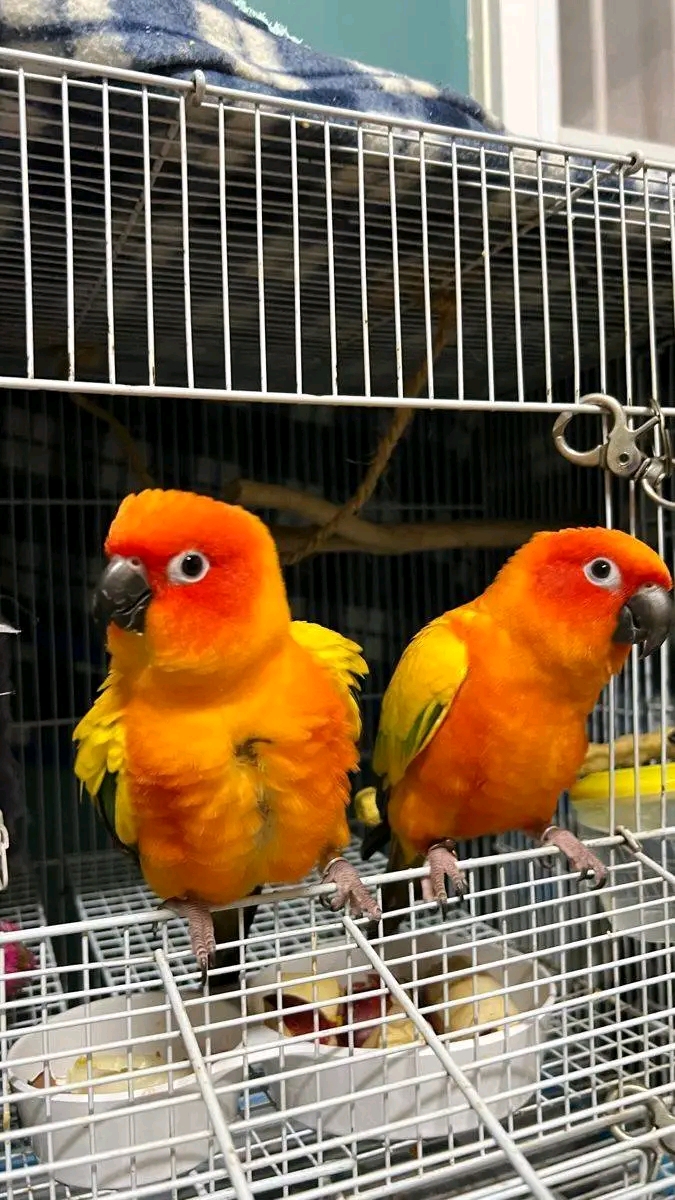
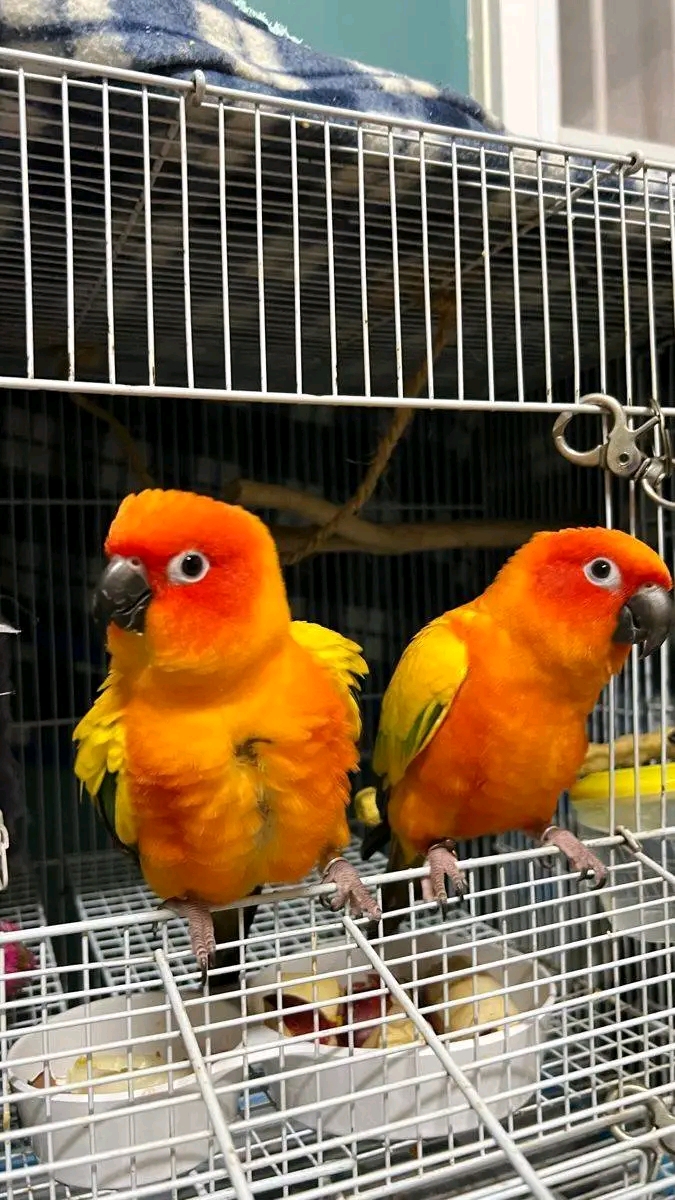
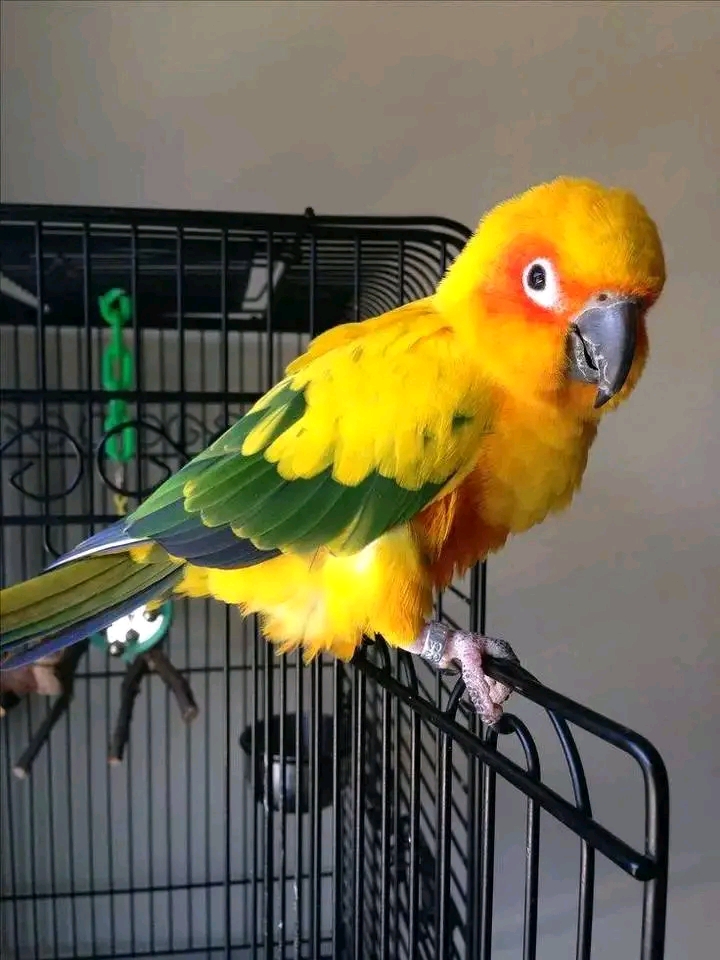
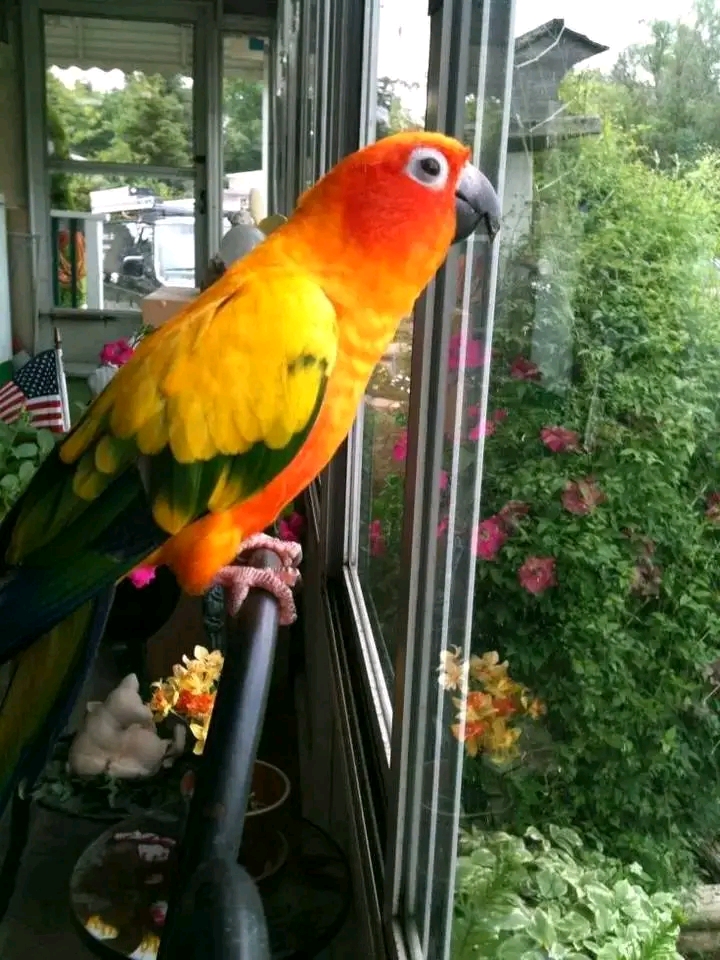
"Sunset" Plumage: Adults are a brilliant golden-yellow with fiery orange flushes on the face and belly.
Contrast Wings: Their wings feature a striking mix of green and dark blue-tipped feathers.
Juvenile Coloring: Young birds start with much more green plumage, which serves as camouflage, gradually transitioning to the full "sun" colors by age two.
Size: They typically reach about 30 cm (12 inches) in length and weigh roughly 120 grams.
Personality & Behavior
Social Butterflies: They are exceptionally affectionate and "cuddly" birds that bond deeply with their owners.
The "Screech": They are famously loud. Their high-pitched, piercing call can be heard for miles and is used to express everything from joy to a demand for attention.
Playful Clowns: They are known for entertaining antics, such as hanging upside down from toys or lying on their backs to play with their feet.
Intelligence: They are quick learners and can be taught tricks, though they are not prolific talkers; most only learn a few "quacky" words.
Natural Habitat & Diet
Origin: Native to northeastern South America, specifically Brazil, Guyana, and Venezuela.
Environment: They thrive in tropical savannas, palm groves, and seasonally flooded forests.
Wild Diet: In nature, they forage in flocks for fruits, berries, nuts, blossoms, and occasionally insects.
Nesting: Uniquely, they often use the same tree cavities for both nesting and nightly roosting.
Conservation Status
Endangered: Due to heavy illegal trapping for the pet trade and habitat loss, there are estimated to be fewer than 2,500 individuals remaining in the wild.
Highlights
- Hand raised
Care notes
Sun Conures (Aratinga solstitialis) are iconic for their "sunset" plumage and big personalities. However, their beauty comes with high social and environmental demands.
Comprehensive Description
Appearance: Adults feature a brilliant gradient of golden-yellow and fiery orange on their bodies, with dark blue and green flight feathers.
Juvenile Camouflage: Young birds are born almost entirely green to blend into the canopy, only achieving their full yellow and orange colors by age two.
Size & Lifespan: They are medium-sized parrots, roughly 12 inches (30 cm) long, and can live 20 to 30 years with proper care.
Personality: Often called the "clowns" of the bird world, they are incredibly affectionate, inquisitive, and acrobatic.
The "Volume" Warning: They are among the loudest parrots for their size. Their high-pitched shriek can hit 120 decibels (louder than a power drill), making them generally unsuitable for apartment living.
Care Requirements
To keep a Sun Conure healthy and happy, you must provide a balance of specialized nutrition and intense social interaction.
1. Diet & Nutrition
Base Diet: High-quality pellets should make up 75-80% of their daily intake.
Fresh Foods: 20-40% of their diet should be fresh vegetables (broccoli, carrots, leafy greens).
Treats: Fruits (apples, berries) and seeds should be limited to 5-10% due to high sugar and fat content.
Toxic Foods: Never feed them chocolate, avocado, caffeine, alcohol, or fruit pits/seeds.
2. Housing & Environment
Cage Size: Minimum 20”x 20”x 30”, but larger is always better to allow for full wing extension.
Location: Place the cage in a high-traffic social area (like a living room) but far away from the kitchen, as Teflon/non-stick fumes are fatal to birds.
Safety: Ensure the cage is draft-free and kept between 65–80°F.
3. Social & Mental Health
Interaction: They require at least 2 to 4 hours of out-of-cage time and direct interaction daily.
Enrichment: Provide a variety of toys for foraging, chewing, and climbing. Rotate these toys every 2 weeks to prevent boredom-induced behaviors like feather plucking.
Hygiene: Offer a shallow dish for bathing or a gentle misting 2–3 times a week to maintain feather health.