Description
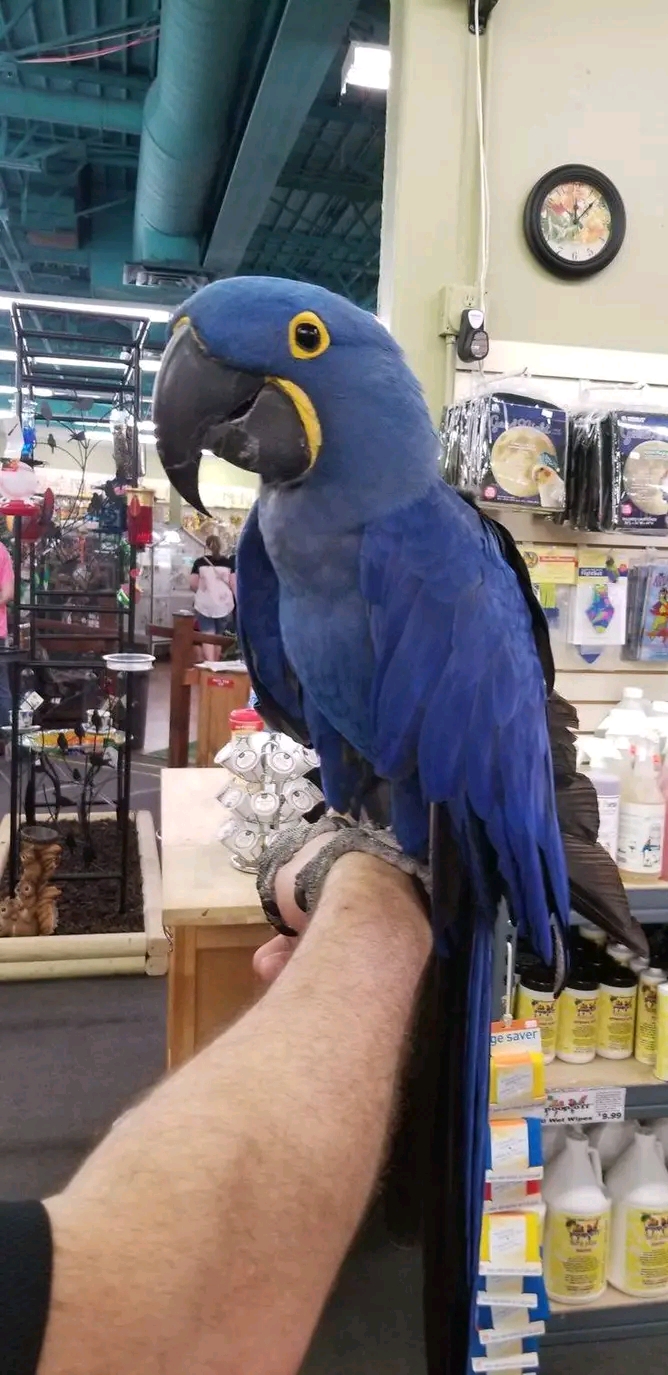
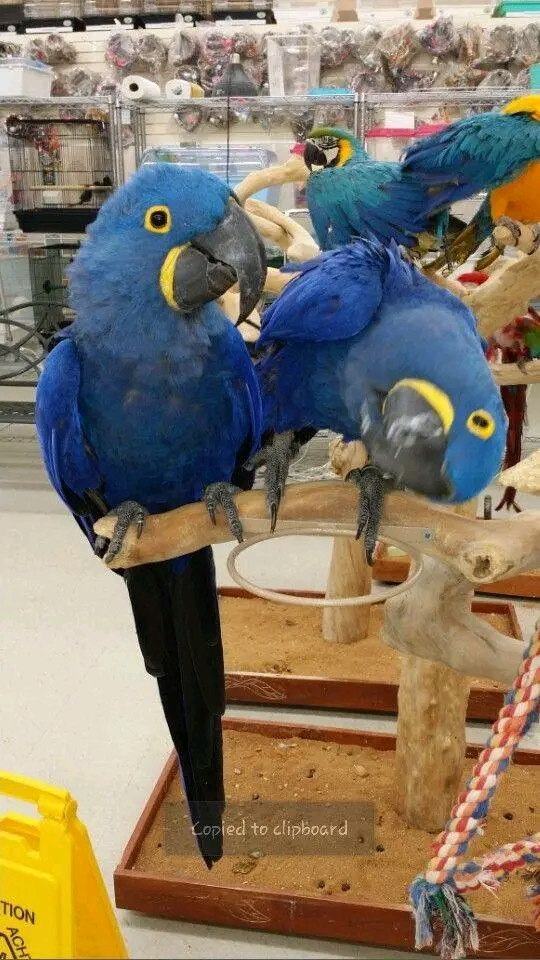
The Hyacinth Macaw (Anodorhynchus hyacinthinus) is the undisputed heavyweight champion of the parrot world. Reaching a length of nearly 1 meter (40 inches), it is the largest flying parrot on the planet and is instantly recognizable by its vibrant, solid cobalt-blue plumage.
Physical Characteristics
The "Smile": They feature bright yellow rings of bare skin around their eyes and a matching yellow "lipstick" patch at the corners of their lower beak, giving them a cheerful expression.
The Powerhouse Beak: Their massive black beak is a marvel of nature, capable of exerting over 300 psi of pressure. This allows them to easily crack nuts that are impossible for other animals to open, including macadamia nuts and even coconuts.
Impressive Wingspan: When they take flight, their wings can span up to 1.5 meters (5 feet), making them a majestic sight in their native habitats.
Natural History & Habitat
Origin: They are native to central and eastern South America, with the largest populations found in the Pantanal region of Brazil.
Environment: Unlike many tropical parrots, they prefer semi-open areas like palm swamps and lightly forested grasslands over dense rainforest canopies.
Specialized Diet: They are highly specialized eaters, surviving primarily on the nuts of the Acuri and Bocaiúva palms. They have even been known to forage for nuts that have passed through the digestive tracts of cattle, as the process softens the tough outer shell.
Personality & Intelligence
"Gentle Giants": Despite their intimidating size and beak strength, they are known for being incredibly sweet, even-tempered, and affectionate with their bonded "flock" members.
Cognitive Ability: They possess the intelligence of a human toddler, showing advanced problem-solving skills and a mischievous sense of humor.
Vocals: They have a deep, guttural call that is extremely loud and can carry for over a mile across the grasslands.
Conservation Status
Vulnerability: The species is currently listed as Vulnerable by the IUCN. Their primary threats include habitat loss due to agriculture and wildfires, as well as the illegal bird trade.
Longevity: In a protected environment, these birds can live between 50 and 60+ years, making them a true lifelong commitment.
Highlights
- Hand tamed
Care notes
The Hyacinth Macaw (Anodorhynchus hyacinthinus) is often called the "Gentle Giant" of the parrot world. As the largest flying parrot species, it requires a level of care and space that far exceeds that of almost any other pet bird.
Detailed Description
Size & Appearance: They reach a massive 1 meter (39–40 inches) in length, with a wingspan of nearly 5 feet. Their plumage is a deep, solid cobalt blue, contrasted by vibrant yellow rings around the eyes and a yellow "smile" at the base of the beak.
The Beak: Their beak is a specialized tool designed to crack the world's hardest nuts. It is powerful enough to break commercial cage bars and even crack coconuts.
Temperament: Known for being exceptionally affectionate and calm, they bond deeply with their owners. However, they are also "chatterboxes" and can be extremely loud, making them unsuitable for apartments.
Care Requirements
1. Specialized Diet
Unlike most parrots, Hyacinths require a diet very high in fat and calories.
The "Nut" Focus: Their primary food should be high-fat nuts like macadamias, Brazil nuts, walnuts, and pecans. In the wild, they specifically eat palm nuts.
Supplements: Offer fresh vegetables (especially leafy greens like kale) and limited fruits daily. Specialized large-macaw pellets are also recommended.
Toxic Foods: Avoid chocolate, avocado, caffeine, and fruit pits/seeds, which are poisonous.
2. Housing & Space
The Enclosure: A standard parrot cage is rarely enough. They need a custom-built, stainless steel walk-in aviary or a dedicated bird room.
Out-of-Cage Time: They require 2 to 5 hours of daily freedom to fly and exercise to maintain their mental health.
Safety: They are highly destructive. Provide a constant supply of heavy-duty wooden toys and branches to satisfy their urge to chew and prevent them from destroying your home.
3. Social & Mental Needs
Interaction: These are high-maintenance "flock" animals. They need significant one-on-one time daily (training, playing, or just "hanging out") to prevent depression and feather plucking.
Enrichment: Use foraging toys and puzzles. Rotating toys every few weeks is essential to keep their highly intelligent minds engaged.
4. Health Monitoring
Common Issues: They are prone to Proventricular Dilation Disease (PDD), respiratory infections, and overgrown beaks if they don't have enough to chew on.
Veterinary Care: An annual exam with an avian specialist is mandatory for a bird that can live 60+ years.